Phantom Divers blog, PADI Dive Center in Playa del Carmen. Diving trips to Cozumel. PADI dive courses in Mexico. Daily boat dives. Dive equipment sales and rentals. www.phantomdivers.com
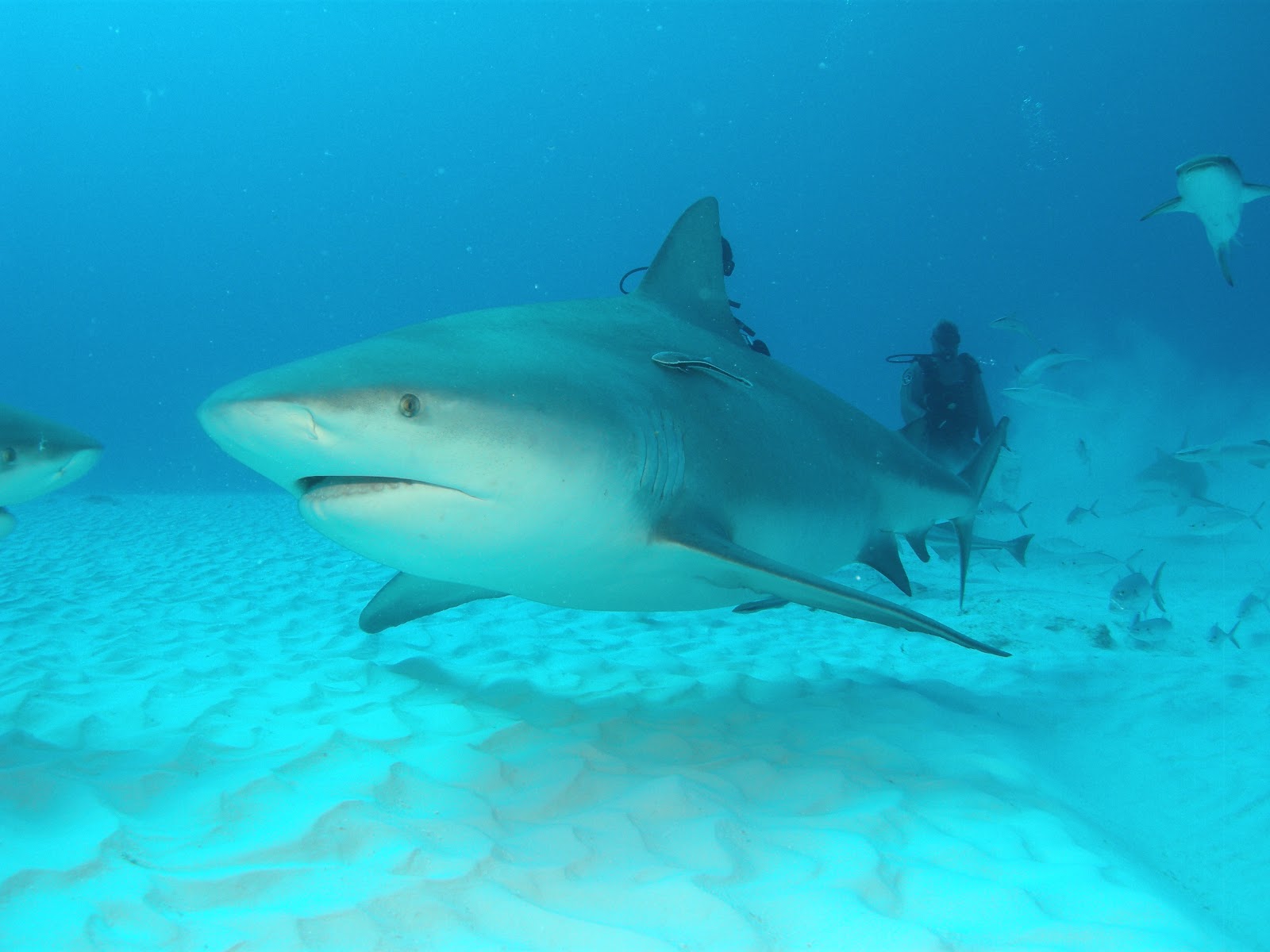
The Bull
shark diving services providers meeting was to approach and solve various problems in
relation to the bull sharks in the area of Playa del Carmen and its
surroundings. This meeting convened by APSA (Association of Providers of Aquatic Services) was informative; in order to make all stakeholders
aware of the existing problems and possible solutions.
At the meeting, the talk was about the following key points: 1 Stop illegal fishing of sharks from the coast of Playa del Carmen. 2.
Organize the services providersinto creative working groups for
the elaboration of a management program, for the sustainable
exploitation of bull sharks.
Jaime González director of the CONANP (National Commission of Protected Natural Areas), was commissioned to lead the meeting. The
November 27 meeting mentioned different initiatives that could be
carried out in order to conserve and sustainably exploit bull sharks,
better known as the Chato shark (cacharhinus leucas) in Playa del Carmen.
The bull shark is seen as a natural resource of common property. Years
ago the use given to sharks was purely fishing, diving and
tourism are now new approaches that can generate profits higher than fishing
and at the same time preserve the resource.
Another variable that enters into relationship, is the increasing awareness and environmental education that people start to have towards the health
of our marine ecosystems. A conflict has emerged between
service providers and fishermen because the coexistence of these two
activities without having clear rules is not possible.
Dr. González stressed that regulations on both sides are needed in order to
regulatefishing and tourist operations. Dr. Gonzalez also mentioned that the
topic of shark toro is a complex problem with too much noise around it, which is
formed by different variables: • Fishing. • Observation diving • Conservation • Incidents to tourists
Some conclusions were: 1. It is necessary to properly monitor the
adherence to responsible fisheries laws; as well as laws of good use of
resources. For example; the point that establishes that you can not fish
to a minor distance of 10 nautical miles outside from the nautical stripe.
2. The sector dedicated to tourist services should define its own
laws, regulations, areas of use, and comply with the minimum security
requirements for the provision of the service in a safe manner
minimising any risk. 3. It is necessary to define an operation system with standardized rules (creation of a management plan). 4.
It is very important to establish the participation of tourist servers with CONANP and
other organizations, in order to achieve a better management plan. Also, the plan needs
support from all the authorities as possible, SECTUR (Secretary of Tourism), SAGARPA
(Secretary of Agriculture, Livestock Development, Rural fishing and Feeding) SEMARNAT (Secretariat of Environment and Natural Resources), and
CONAPESCA (National Committee on fisheries).
Finally, some keys to achieve this goal are the organization,
management, designation of restricted areas and the creation of a
general regulation for all those who use the resource of bull sharks. Because
both the resource as well as whoever uses it are already the most affected,
therefore urgent and collective action for the sake of sharks
and all are needed. It is time to stop entering into controversies and stagnate
on issues that can be resolved later, if there is union between
the different parties involved and consistent decisions. Be part of the
change and improvement!
· It is a common mistake to refer to an octopus' arms as tentacles. Tentacles are longer than arms. Tentacles usually have suckers only at their tips.
· Most species of octopi can release a thick cloud of black ink that helps to confuse predators and provide the octopus an edge when attempting to escape. One of the pigments in the octopus' ink is melanin (the same pigment that gives our skin and hair color).
· Chromatophores enable an octopus to camouflage itself with its surroundings by changing the appearance of its epidermis.
· An octopus has three hearts. Two hearts are used to pump blood to each of the octopus' lungs and the third pumps blood throughout the body.
· Octopi move through the water either by crawling or by jet propulsion. Octopuses are among the few animals that move by means of jet propulsion. Because jet propulsion requires much energy, many octopuses also crawl when moving more slowly. Night dives at Phantom Divers are your best opportunity to watch them hunt for food or in constant movement!!!!
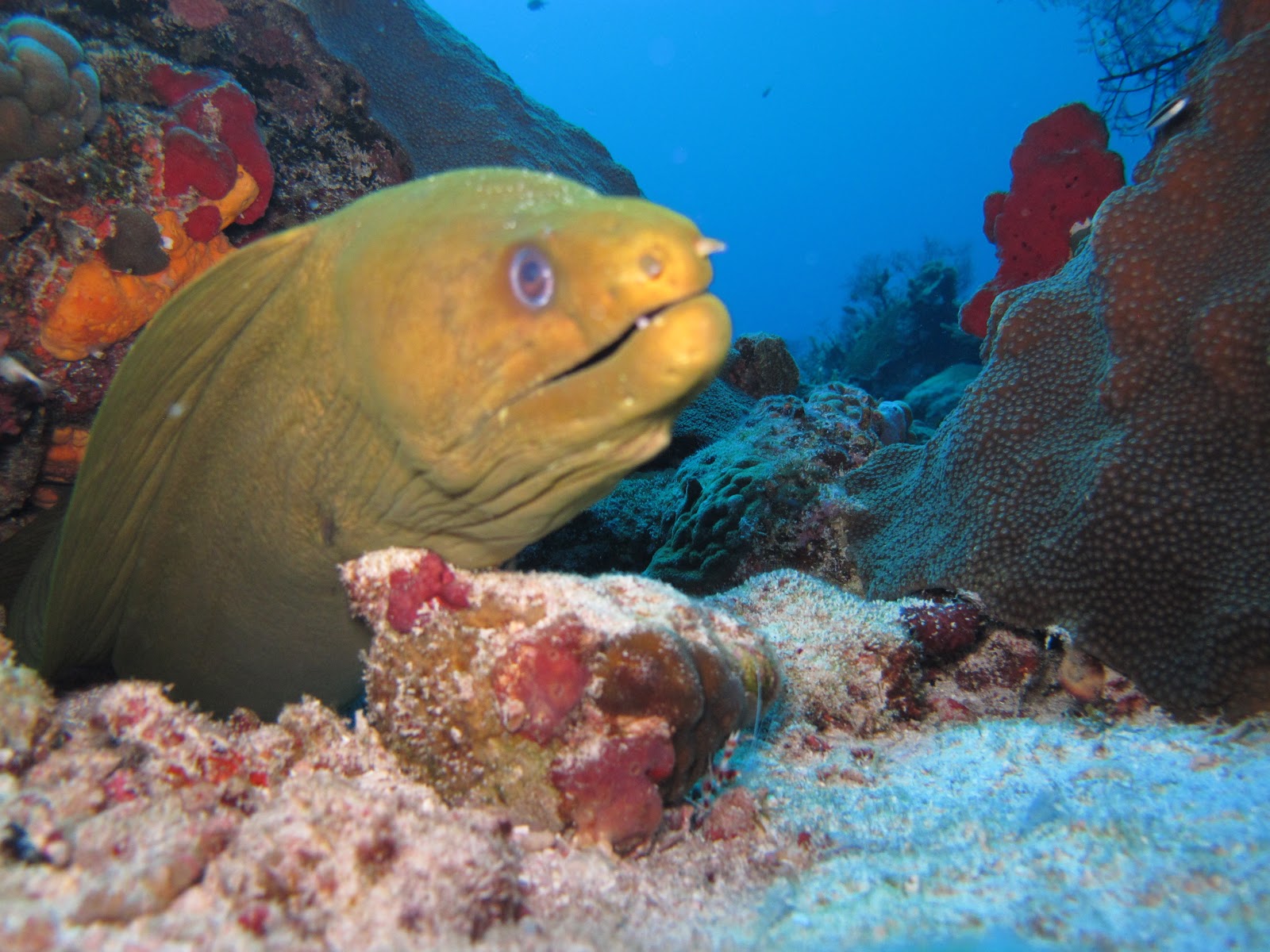
There
are over 200 different types of Moray Eels around the world, living in a
number of different environments. The smallest moray is about
12cm (5 inches) and the longest is about 4m (13 feet) long. The largest
variety of the species being found in warm tropical waters and reefs
such as the ones you can find in Playa del Carmen, Mexico.
The
Moray Eel relies on camouflage and smell to catch its food as it has
relatively poor eyesight. It lies in crevaces and waits for its next
meal to swim past. To assist with hiding even the inside of the mouth is
coloured to fit in with its surroundings. This also allows the moray to
lie in waiting with its mouth open to get little warning to the
unsuspecting prey. The moray eel also has a second set of jaws that move
forward when attacking and give the eel some extra grip on the prey.
This second set of jaws also help pass the food down to the stomach of
the ray.
There are only a few predators of the moray eel, they include the barracuda, groupers, Sea Snakes and other Moray Eels. The Moray itself is carnivorous and eats just about anything.
The
Morays have sometimes been described as bad tempered, however morays
are shy and secretive, and attack humans only in self-defense. During
our Playa del Cramen dives as well as in Cozumel it is very likely you will encounter several morays! One of the favorite dives offered at Phantom divers are the night dives, were you can actually see how morays hunt for dinner!