Wednesday, September 26, 2012

Sea turtles while diving in Playa del Carmen

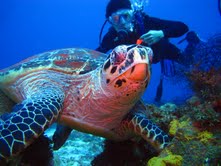
While diving in Playa del Carmen one of the most popular marine species for our divers is the sea turtles . Phantom divers find turtles every day here in Playa del Carmen, and the best thing is that they are not afraid of the camera. Sea turtles are reptiles, and need to go outside to the surface in order to breathe.They are animals that can live a great number of years, (it is estimated that about 100). 


Amongst the sea turtles that can be found snorkeling or diving on the reefs of Playa del Carmen is the hawksbill turtle, green turtle and loggerhead turtles. 


• Hawksbill Turtle: the turtles are smaller, characterized by its nose like that of a hawk's beak. This turtle can reach up to 90 cm long. 

• Green Turtle, have a shell with an oval-shape, and can measure up to 1.20 m. The name of 'green' is not due to the color of its shell, rather the green color of its meat 

• Loggerhead turtles: ls characterized by its large head and the heart-shaped shell. They can measure up to 115 cm. 

Sea turtles are very threatened animals, both in its natural environment, the sea, and the terrestrial environment. When they exit to spawn, is where they are the most vulnerable. The percentage of babies who survive is very low (1 or 2 of every 1000 is estimated). Currently, the plundering of nests and the tourist development are causing more difficulties for the turtles.


Join us to discover this and much more the Mexican Caribbean offers us.

Send us an email for your reservation:
info@phantomdivers.com
or
 check our web site for more information 

Saturday, September 22, 2012

BIOLUMINESCENCE at nigth dives!!!


Bioluminescence is the ability of some organisms to produce light. Bioluminescence is a chemical reaction which requires the interaction of two  proteins: luciferin and luciferase. These proteins react together in the presence of oxygen, and cause a cold light as the reaction.
The ligth produced is very intense and is concentrated in a small area of the animal.The ligth can be seen from green to blue, which is the most frequent, or sometimes can also be seen in red and amber.


Akhon

US Geological Service

NOAA Ocean Explorer Gallery


Noctiluca miliaris is a unicellular organism which causes most phosphorescence phenomena in the sea, it is the bacteria responsable for the ligth produced  when shaking the hands at nogth under the sea. This is a wonderful experience 100%  recommended if you are interested you have to come to Playa del Carmen, Mexico and try out of night dives which we offer on a daily basis here at Phantom Divers.

There are three  main types of bioluminescence:


  • The intracelular which is generated by specialized cells of the body of some species and whose light is emitted through the skin.
  • The extracellular occurs from the reaction between luciferin and luciferase outside the body.
  • The luminous bacteria simbiosis occurs in several parts of the body where animals have  have photophores and keep the luminescent bacteria. Some species produce continuous light whose intensity can be regulated through the nervous system.

Join us to discover this and much more the Mexican Caribbean offers us.

Send us an email for your reservation:
info@phantomdivers.com
or
 check our web site for more information 

Wednesday, August 8, 2012

Search the seahorse on your next dive in Playa del Carmen

-->
Although we have seahorses in Playa del Carmen generally it's not very easy to find them since they are experts at camouflage. But lately on one of our shallow dives we spotted one of these unique fish.


Fish?
Yes, seahorses are fish although they don't look like it at all. Moreover they are very bad swimmers, which is the reason why they spend most of the time resting in one area, sometimes holding on to the same coral or seaweed for days. So the chances that you can see the seahorse we spotted are pretty good at the moment.  


Here are some more facts about this unique creatures: 
The average life span of seahorses in the wild is 1 to 5 years. Seahorses have no teeth and no stomach. Food passes through their digestive systems so quickly, they must eat almost constantly to stay alive.

  
Contrary to most other fish, seahorses are monogamous and mate for life and unlike any other species, the males become pregnant. Females insert her eggs into the male's brood pouch. Once all the eggs are inserted, the male goes to a nearby coral or seaweed and grabs on with his tail to wait out gestation, which may last several weeks.  


 Favorite seahorse habitats are coral reefs, seagrasses, and mangrove forests. 
Despite their tendency to live in shallow waters, seahorses are difficult to see in the wild - they blend very well with their surroundings.

Join us to discover this and much more the Mexican Caribbean offers us.

Send us an email for your reservation:

info@phantomdivers.com

or check our web site for more information about tours and promotions:


Sunday, July 22, 2012

Enjoy diving in Barracuda and Sabalos reef, Playa del Carmen, Mexico.

Playa del Carmen offers many good dive sites to divers from all over the world. 
Two of them are Barracuda and Sabalos reef, both located about 15 minutes south of Playa del Carmen in front of Xcaret. 
Barracuda and Sabalos are quiet shallow reefs with a maximum depth of 45 to 50 feet.  


A large variety of sea life, large schools of colorful fish, sponges, hard and soft corals can be enjoyed in Barracuda and Sabalos reef. 


Many overhangs, cavern formations and holes make the diving in these reefs very interesting, since they are filled with life and plenty of things to discover.


 scorpion fish

grey angelfish

Morays, crabs, spider crabs, parrot fish, angel fish, triggerfish, tarpon, schools of barracuda, big groupers and much much more is what you can discover while diving in Barracuda and Sabalos reef.

Join PHANTOM DIVERS soon for some great dives!

Send us an email for more information 
or 
check our web site for our tours and promotions:

info@phantomdivers.com


Saturday, July 14, 2012

Diving in PUERTO MORELOS, Mexico.


The Riviera Maya has a lot to offer to enthusiastic divers.
Our dive center - PHANTOM DIVERS - is located in Playa del Carmen, Mexico, but we also organize fascinating tours to other places such as to the small village called Puerto Morelos, located between Playa del Carmen and Cancun. 
Just few people know this marine park which makes it even more interesting: the reefs are very intact and there is a huge and colorful quantity of sea life inhabiting the beautiful reefs like CUEVONES, PICUDAS, CARACOL, LA BOCANA, EL TUNEL, LOS JARDINES, LA PARED, ACUARIO among others.


Among connoisseurs Puerto Morelos is known for one of the nicest ship wrecks in the area, the C-56 Juan Escutia. 
There are large schools of fish wondering around this ship wreck and the C-56 is habitat for different kinds of corals covering it. 
The ship was sunk in the year 2000 at a depth of 30 meters / 100 feet with the purpose of creating an artificial coral reef. 


If you like new experiences you will love this!!!
Come and enjoy the Mexican Caribbean with us!!
For more information:

Monday, July 9, 2012

COME TO HAVE A CLOSER LOOK!

When it comes to diving 
most divers like to talk about bigger marine animals 
they saw on their dives, such as sharks, barracudas, rays, morays or turtles just to mention a few. 
And there is no doubt that it is amazing to see those beautiful creatures. 

But as you will see it is definitely worth to have a closer look while diving 
to discover the tiny little animals living in the reefs or 
to search for the not so small but camouflaged animals in the ocean.

So next time you go diving watch out for those little beauties!

Little squat anemone shrimp

They can usually be found on corals and diverse anemones always in close proximity to its host.
Usually seen in pairs, but also in groups of six to eight.

Flamingo tongue snail
feeding by browsing on the living tissues of the soft corals on which it lives

Juvenile Trunkfish 
with the size of a pea buzzing around

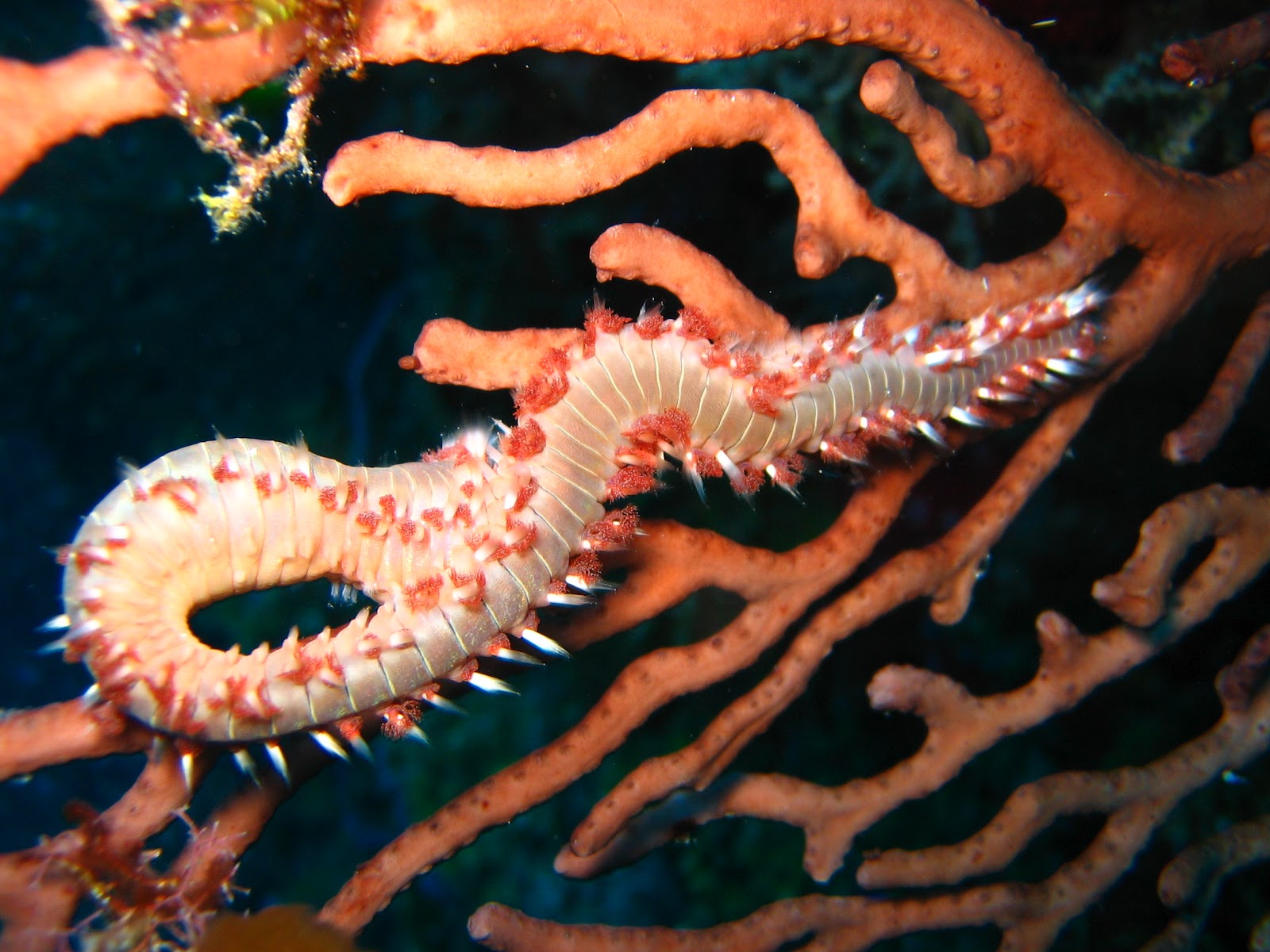
Fireworm
they can usually be found on reefs, under stones in rocky areas of the sea

Peacock flounder hiding in the sand

Come to the Mexican Caribbean!
It will be a pleasure for the staff of Phantom Divers to show you the big picture as well as the hidden details!

Check our web site for more information about our tours and promotions:


or send us an email with your questions or reservation:

info@phantomdivers.com


Wednesday, July 4, 2012


HAPPY INDEPENDENCE DAY TO OUR FRIENDS FROM THE STATES


Phantom Divers wishes you all a very happy 
4TH OF JULY! 

What better way to celebrate this symbol of liberty 
than with some amazing dives? 
Feel the sense of liberty diving in the Mexican Caribbean and enjoying 
colorful and lively reefs in Playa del Carmen, 
magical Cenotes and
 amazing wall dives in Cozumel.

Get more information about our tours and promotions:


or write us an email:

info@phantomdivers.com